
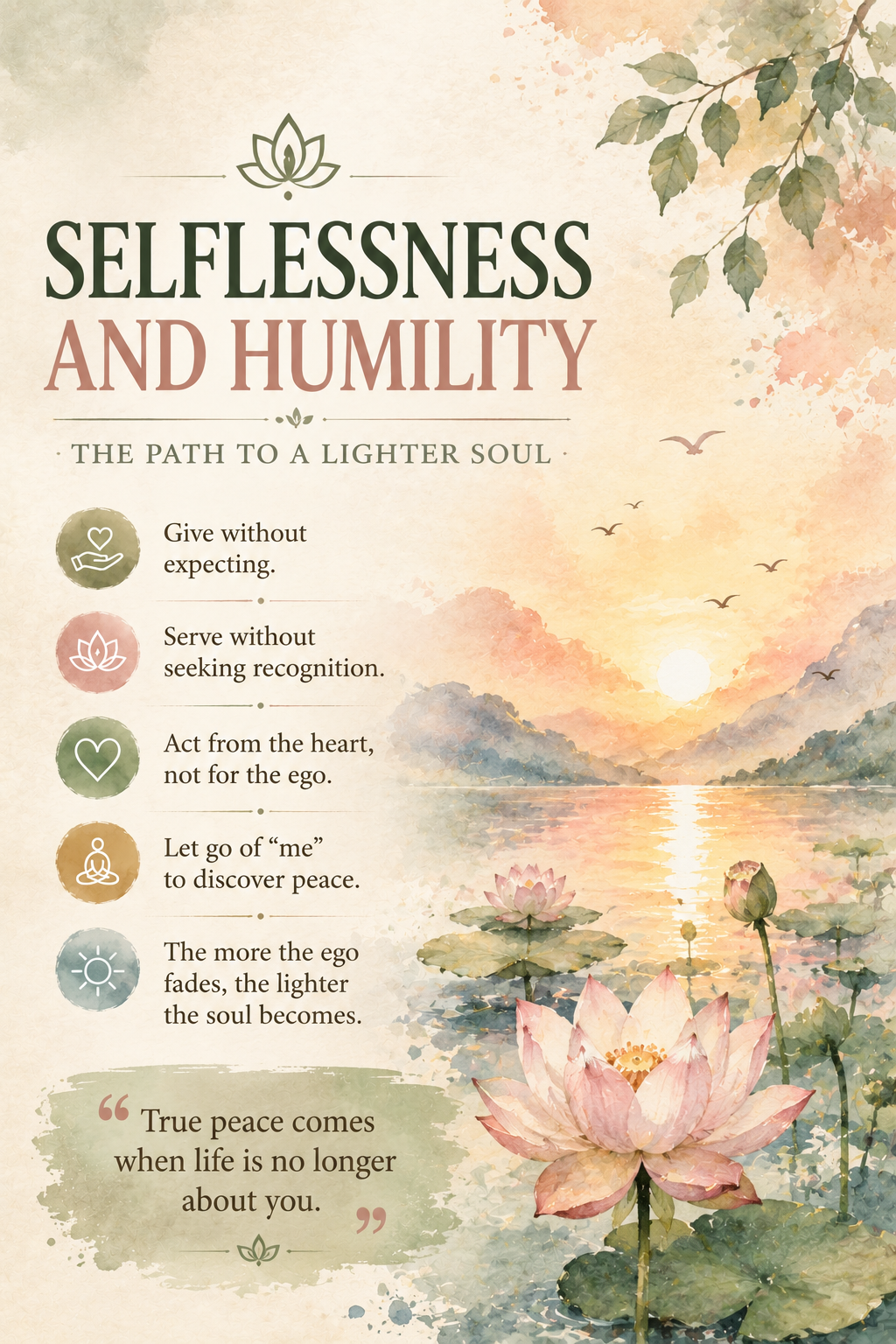
Selflessness and humility are slowly disappearing from modern life. Today, most people are taught to chase attention, competition, and personal importance. Even kindness is often mixed with hidden expectation. We help others, but somewhere inside, we still want appreciation in return.
And when that appreciation does not come, the mind becomes disturbed. A silent disappointment appears. Sometimes anger. Sometimes sadness. Sometimes distance from people we once cared about.
Very few people notice that the real pain was not caused by giving. It was caused by expecting something back.
The Hidden Weight of Ego
The ego constantly wants confirmation.
It wants to feel respected. It wants to feel important. It wants others to behave according to its expectations.
This is why even small situations begin affecting the mind deeply. One harsh word feels unbearable. One moment of disrespect stays in memory for days. One missing appreciation changes the mood completely.
A person may appear calm outside while constantly fighting inner battles created by pride and expectation.
The ego does not only seek power. Sometimes it simply seeks attention.
What Real Humility Actually Means
Humility does not mean becoming weak or allowing others to misuse you.
A humble person can still speak truth. A humble person can still protect others. A humble person can still stand against injustice.
The difference is inner intention.
An ego-driven person reacts from anger and personal hurt. A humble person acts from clarity and responsibility.
Outwardly both actions may look similar, but inwardly they are completely different.
Ego wants victory.
Humility wants truth.
Selflessness wants the well-being of all.
How Selflessness Quietly Changes the Heart
There is a different peace in helping without display.
Maybe you support someone during their difficult time without mentioning it to others. Maybe you forgive someone who never apologized. Maybe you stay kind even after being misunderstood.
Such moments slowly purify the heart.
Not because the world rewards them immediately, but because the soul becomes lighter when actions are no longer controlled by selfish desire.
The purest actions are the ones that do not need recognition to continue.
Where Most People Become Trapped
Many people begin good actions sincerely, but slowly the ego enters quietly.
- Helping others to feel superior
- Giving while expecting loyalty in return
- Correcting others only to feel wiser
- Doing kindness for praise
- Feeling hurt when effort goes unnoticed
This is how suffering quietly enters even spiritual or good actions.
The outer action may look pure, but inwardly the mind remains restless because the ego is still asking for something.
The Turning Point
Real peace begins the moment life stops revolving around “me.”
This does not mean neglecting yourself. It means becoming less obsessed with protecting your image, your importance, and your expectations all the time.
A person becomes emotionally lighter when they no longer need constant validation from the world.
Slowly, relationships become simpler. Service becomes natural. Kindness becomes effortless.
The soul becomes peaceful when it no longer needs applause for every good action.
Nature Already Lives This Way
The sun gives light without asking who deserves it. The river keeps flowing without demanding recognition. Trees offer shade even to the person who throws stones at them.
Nature serves silently because giving is part of its existence.
Human beings feel deep peace when they reconnect with this forgotten simplicity.
A Small Shift in Daily Living
You do not need to become perfect overnight.
Simply begin observing yourself honestly.
- Notice where expectation enters your kindness
- Notice where pride enters your knowledge
- Notice where anger hides behind righteousness
- Notice where the heart genuinely wants to serve
Awareness itself begins transforming the mind.
The world teaches people to become important. Spiritual wisdom teaches people to become free.
True humility is not thinking less of yourself. It is finally becoming less controlled by yourself.
No Comments