
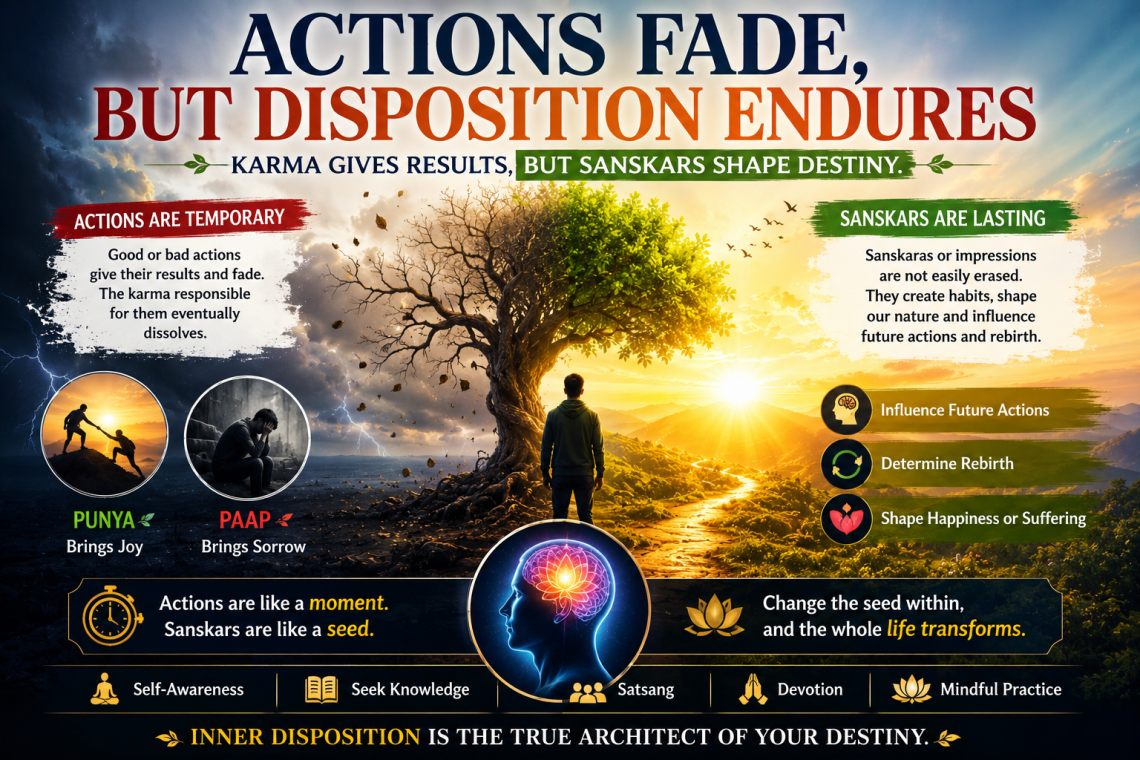
Actions may fade after giving their results, but the sanskars behind them continue shaping consciousness for a long time.
Most people judge life only through visible actions.
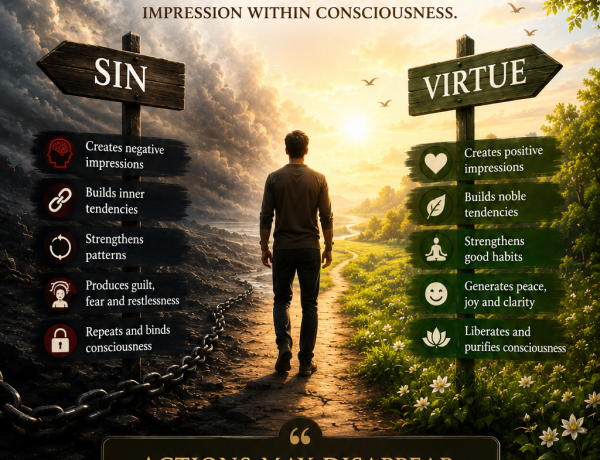
Good actions are called virtue.
Bad actions are called sin.
And while actions certainly create consequences, spiritual wisdom goes much deeper than actions alone.
Because actions eventually fade after producing their results.
But the deeper impressions created by those actions often remain hidden within consciousness.
Good and bad karma may dissolve after giving pleasure or suffering, but the sanskars created by them do not disappear so easily.
A kind action may create temporary happiness.
A harmful action may create temporary suffering.
But once the result is experienced, the karma itself slowly comes to an end.
The deeper issue is the inner tendency repeatedly creating those actions.
Repeated anger strengthens the sanskar of anger.
Repeated fear strengthens fearful tendencies.
Repeated greed deepens attachment internally.
Similarly, compassion, devotion, truthfulness, patience, and awareness also create positive impressions within consciousness.
Actions may disappear with time, but the sanskars behind them quietly continue influencing the direction of life.
This is why many people keep repeating the same emotional struggles throughout life.
The outer situations change.
The people change.
The environment changes.
But the inner sanskar behind the reaction often remains unchanged.
And so similar suffering appears again in different forms.
Suffering often repeats not because life refuses to change, but because the deeper tendencies within consciousness continue repeating.
Sanskars silently influence reactions before conscious thinking even begins.
This is why certain fears, anger, jealousy, desires, and attachments feel automatic.
The reaction appears immediate because the inner pathway has already become deeply conditioned through repetition.
Over time, repeated thoughts and emotional habits begin shaping one’s entire disposition or swabhava.
And eventually, actions start flowing naturally from that inner condition.
This is why two people may perform similar actions outwardly while carrying completely different inner states.
One person may help others for recognition.
Another may help from genuine compassion.
Outwardly the action looks similar.
Inwardly the consciousness shaping the action is entirely different.
And spiritual growth depends deeply on that inner consciousness.
The deepest influence on life is not a single action, but the inner nature repeatedly creating those actions.
Nature reflects this beautifully.
Just as repeated footsteps slowly create a visible path through grass, repeated thoughts and actions create deep pathways within consciousness.
Eventually, reactions begin happening automatically.
Fear responds with fear.
Anger responds with anger.
Peace responds with peace.
Awareness responds with awareness.
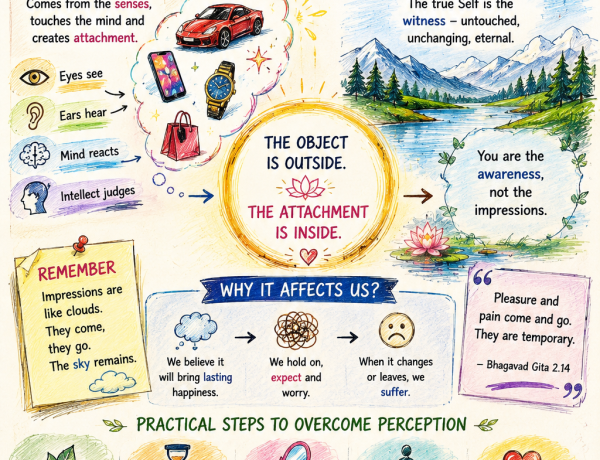
And slowly, these patterns begin controlling perception itself.
Modern life strengthens this process constantly.
Continuous stimulation, comparison, emotional reactions, negativity, and mental noise repeatedly create new impressions within the mind.
Most people remain unaware of how deeply these patterns silently shape their inner world.
This is why temporary motivation alone rarely creates lasting transformation.
Suppressing behavior temporarily is different from transforming the sanskar behind it.
Real spiritual growth begins when the root tendency itself starts weakening.
This is also why spiritual practices are repeated consistently.
Meditation slowly weakens restless patterns.
Prayer softens emotional hardness.
Self-awareness exposes unconscious tendencies.
Satsang influences consciousness positively.
And devotion gradually purifies the deeper impressions hidden within the mind.
True transformation rarely happens suddenly.
It happens quietly through continuous inner refinement.
Freedom does not begin merely when actions stop. It begins when the inner tendency compelling those actions starts dissolving.
Over time, purified sanskars create natural simplicity within consciousness.
The mind reacts less impulsively.
Compassion becomes easier.
Inner conflict reduces.
Awareness deepens.
And peace slowly begins arising from within instead of depending completely on outer circumstances.
Because transformation has finally started reaching the root of consciousness itself.
Actions create temporary results, but sanskars silently decide the direction in which consciousness continues moving.

No Comments